
Why Some Painters Work Quickly While Others Work Slowly
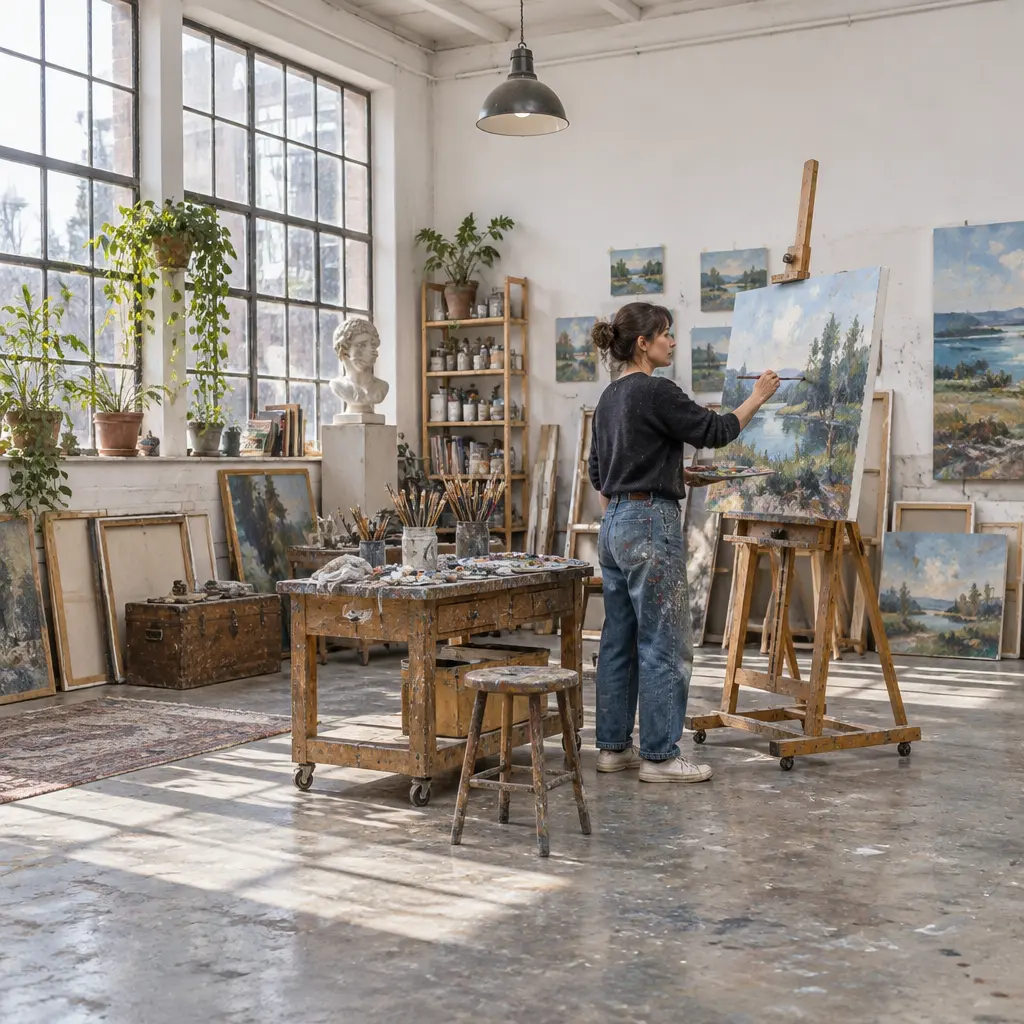
A painter’s speed is the pace at which they plan, apply, revise, and finish a painting; it is not a simple measure of talent or care. Some painters work quickly because they use broad, decisive marks, familiar methods, or time limits, while others proceed slowly to build layers, refine detail, or solve visual problems. The difference becomes clearer by looking at technique, materials, subject matter, experience, and working conditions. These factors matter because painting time affects not only an artist’s process but also how viewers understand spontaneity, finish, and artistic value.
Painting speed reflects technique, not artistic quality
Painting speed describes how an artist allocates time across stages of making an image. It can include preparation, drawing, blocking in large shapes, applying paint, waiting for it to dry, and revising. Art historian E. H. Gombrich’s account of representation in Art and Illusion emphasizes that artists work through choices and adjustments rather than simply copying what they see. That process can be rapid or extended, and the visible result alone does not reveal how long it took.
Speed also has several meanings. A painter may make marks quickly while spending months planning a work, or paint slowly because the medium requires drying time rather than because each decision is unusually deliberate. These distinctions help explain why a fast-looking painting may be carefully constructed and why a detailed painting may involve long stretches of technical waiting.
Gesture and alla prima painting
Gesture painting uses energetic marks to capture movement, form, or a subject’s overall impression. In alla prima, or direct painting, an artist aims to complete a passage in one session, often applying wet paint over wet paint. The method can reduce the need to wait for layers to dry, but it demands quick decisions about color, shape, and brushwork. The National Gallery of Art’s materials on painting techniques describe direct painting as a process in which artists work wet-in-wet, a method associated with immediacy but not necessarily with casual preparation.
A painter working alla prima may still spend substantial time selecting a composition, setting up a palette, or studying the subject. The speed lies mainly in the execution of the painted passage. A useful comparison is a timed portrait session: the artist has limited minutes to observe and respond, so large shapes and essential features take priority over small refinements.
Layering and slow refinement
Layered painting builds an image through successive applications of paint, sometimes allowing each layer to dry before adding another. This approach supports changes in opacity, depth, and surface, but it can extend the calendar time required to finish. Oil paint, in particular, may dry slowly depending on pigment, layer thickness, and environmental conditions. The Getty Conservation Institute explains that paint drying and curing involve material processes that vary by medium and composition, so drying intervals are not simply evidence of an artist working slowly.
Slow refinement is also common when a painter repeatedly adjusts edges, values, or small details. The artist may compare parts of the work, step back to assess it, and return later with fresh eyes. Such pauses are part of the decision-making process: they allow the painter to judge relationships across the whole composition rather than treating each mark in isolation.
Materials and subject matter shape a painter’s pace
A painter’s pace depends partly on the physical behavior of materials and partly on what the work asks them to represent. Watercolor dries relatively quickly and can be difficult to revise cleanly once a wash has settled; oil paint often permits blending and reworking for longer, while also requiring more drying time between some layers. Acrylic paint generally dries faster than traditional oil paint, which can support quick layering but may require artists to work promptly while a mixture remains wet. These are broad tendencies, not fixed rules: additives, humidity, surface, and technique all affect working time.
Subject matter also changes the pace. A broad landscape may call for rapid decisions about shifting light, while a portrait may require careful attention to subtle differences in proportion and expression. The distinction is not absolute: a landscape can be meticulously developed, and a portrait can be painted in a single concentrated sitting.
Drying time, revisions, and workflow
Drying time is the interval before paint can be safely handled or covered without disturbing the layer beneath. It influences workflow, but it does not equal hands-on painting time. A painter might complete several canvases in rotation while waiting for oil layers to dry, or use that interval to plan, draw, or prepare materials. Conversely, a fast-drying medium may shorten pauses while increasing pressure to make decisions before paint sets.
The medium’s possibilities also influence revision. Wet oil paint can be blended, scraped back, or altered during a session; watercolor revisions may require lifting pigment or accepting the mark as part of the image. Artists choose processes that suit their aims, so a slower workflow may reflect a deliberate preference for adjustment rather than inefficiency.
Subject complexity and observational demands
Complex subjects often require more visual decisions. A crowded interior, intricate fabric, or reflective object presents many relationships of shape, color, and light. The painter must decide which details to preserve and which to simplify. A simpler subject can be completed quickly, but minimal compositions can also demand extensive consideration because each mark has greater visual weight.
Working from life introduces another constraint: the subject may change. Outdoor painters, for example, often respond to moving clouds and shifting sunlight by laying in broad color relationships rapidly. Their speed is a practical answer to changing conditions, not necessarily a preference for roughness.
Experience, intention, and working conditions influence speed
Experience can make some tasks faster because practiced artists recognize recurring visual problems and know how to address them. They may mix colors efficiently, plan a composition with fewer false starts, or use familiar brushwork. Yet expertise does not always produce a faster finished painting: experienced artists may set more demanding goals, revise more critically, or choose complex procedures. Speed is therefore shaped by what an artist intends to achieve, not just by skill.
Working conditions matter as well. A commission deadline, live demonstration, or short model session encourages a compressed process. A self-directed studio project may allow repeated study over months. In both cases, the artist balances time, resources, and the desired outcome.
Practice, planning, and decision-making
Practice can reduce hesitation by making technical choices more familiar. A painter who has repeatedly mixed a range of skin tones, for instance, may spend less time testing colors during a portrait. Planning can also move work out of the painting session: sketches, color studies, and compositional thumbnails may take time but make later execution more direct.
However, deliberate uncertainty can be part of an artist’s method. Painters sometimes test alternatives, make unsuccessful passages, or change direction as the image develops. Those experiments may add time while improving the work. A finished painting rarely records every abandoned choice, so its apparent simplicity can conceal a long process.
Deadlines, commissions, and studio routines
External schedules can change both pace and technique. A live demonstration has a visible time limit, while a commissioned work may require client feedback and revisions. Artists may also establish routines such as daily studies or short timed exercises to encourage decisiveness. In these situations, speed is partly a response to the structure of the task.
Studio routines can make a painter appear consistently fast or slow, but the total effort may be distributed unevenly. A session of intense brushwork might follow days of observation and planning. A long project may contain brief bursts of painting separated by drying, reassessment, and practical preparation.
Fast and slow painting are visible in art history
Historical examples show that pace is a meaningful artistic choice, though it should not be inferred from appearance alone. The Impressionists’ interest in changing light encouraged rapid outdoor studies, while many artists in other traditions developed works through extensive drawing and layering. Museum conservation research can reveal revisions beneath a painting’s surface, demonstrating that a seemingly resolved image may have evolved through multiple stages.
For example, the National Gallery in London has documented how technical examination of paintings can identify changes in composition and working methods. Imaging tools such as infrared reflectography and X-radiography may reveal underdrawings, altered contours, or earlier versions of a painted passage. Such evidence helps distinguish the time spent visibly applying paint from the longer process of designing and revising an artwork.
Rapid studies and changing light
Rapid studies are paintings or sketches made to record a scene or visual effect before it changes. They often prioritize broad tonal and color relationships over precise detail. This approach is especially useful outdoors, where light and weather can shift quickly. A concise study may later serve as a reference for a more developed studio painting, so a fast work can be one stage in a slower overall process.
The method also demonstrates why speed is not synonymous with lack of thought. The painter must quickly decide what matters most: the direction of light, the arrangement of masses, or the contrast that gives the scene its character. Omission is part of the technique.
Conservation evidence and hidden revisions
Conservation science provides evidence about how paintings were made. Technical imaging and material analysis can uncover sketches, pentimenti—visible or concealed changes made during painting—and later restoration. The National Gallery and the Getty Conservation Institute describe examination methods that help researchers understand layers and alterations without relying solely on an artist’s finished surface.
This evidence cautions against judging working speed from a painting’s style. Loose brushwork may be the result of careful planning and selective simplification; smooth, detailed work may have been completed efficiently through a practiced method. The most reliable account combines visual analysis with documentary and technical evidence when available.
Conclusion: painting speed is a choice shaped by many factors
Painters work quickly or slowly because technique, materials, subject complexity, experience, intention, and working conditions interact. Gesture and alla prima methods favor direct decisions; layered approaches and meticulous refinement often extend the process. Drying times influence schedules but are distinct from active labor, and historical or conservation evidence shows that a painting’s visible finish may conceal planning and revision.
Understanding these differences makes it easier to appreciate paintings without treating speed as a measure of quality. When looking at a work, consider what its marks communicate, what the medium permits, and what evidence might reveal about its making. For further study, explore museum resources on painting techniques and conservation, or compare rapid studies with more developed works by the same artist.
Sources: E. H. Gombrich, Art and Illusion: A Study in the Psychology of Pictorial Representation, https://press.princeton.edu/books/paperback/9780691169846/art-and-illusion; National Gallery of Art, Painting Techniques, https://www.nga.gov/learn/teachers/lessons-activities/painting.html; Getty Conservation Institute, Art Conservation and the Science of Materials, https://www.getty.edu/conservation/; The National Gallery, Art and Artists: Conservation, https://www.nationalgallery.org.uk/research/research-resources/conservation
Related Post

The Enduring Allure Of Painting As A Living Practice
Painting as a Living Practice: Why the Medium Continues to Matter Painting as a living [...]
Why Some Shows Stick With You Long After You Leave
Shows: Emotional Stickiness and Why Stories Stay With Us Shows are serialized or episodic screen [...]