
How Photography Changed the Role of Painting
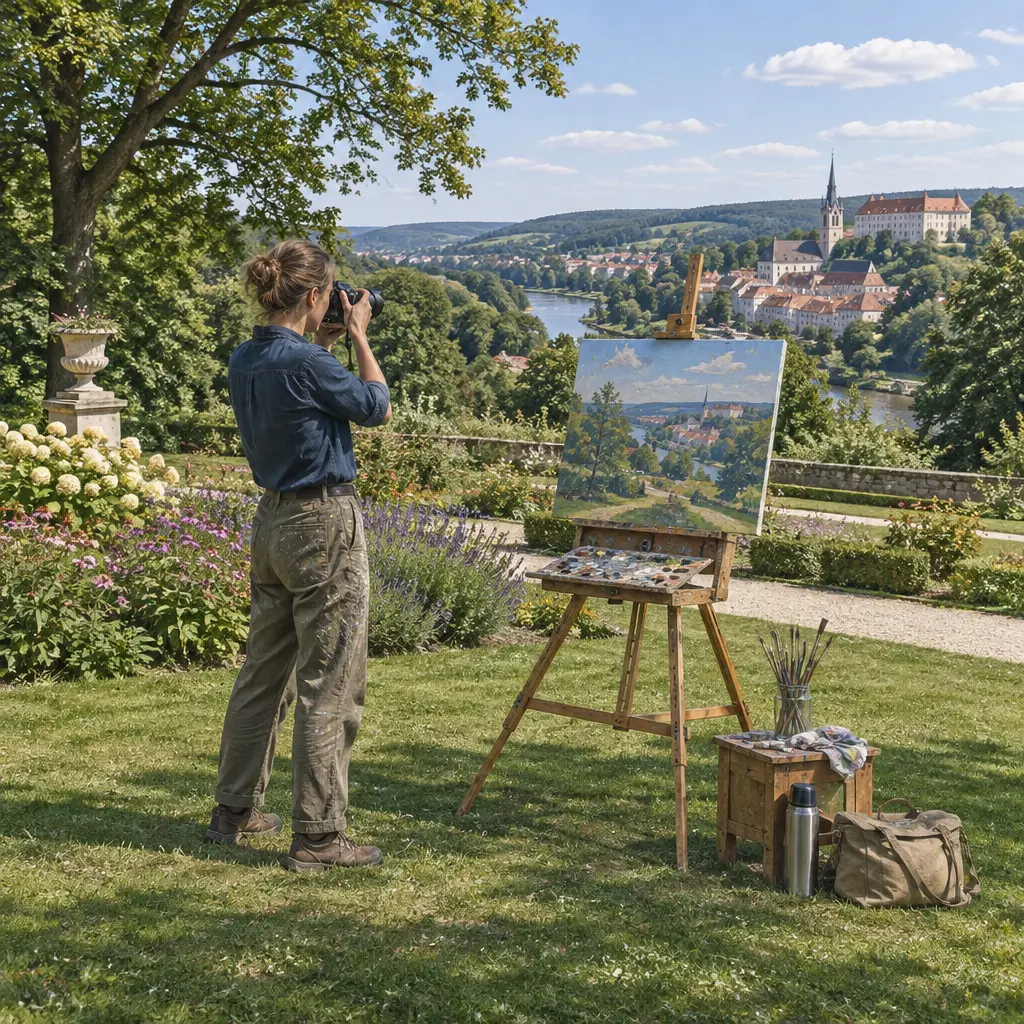
Photography changed painting by taking over much of its traditional work as a tool for recording appearances, encouraging painters to explore color, perception, emotion, and abstraction instead. From the camera’s public debut in 1839 to the rise of modern art, photography did not simply replace painting: it gave artists new ways to compose images and new questions to pursue. The shift is visible in the history of portraiture, Impressionist experiments with fleeting moments, and later movements that challenged representation. It remains relevant today, when digital images again reshape how artists make and interpret pictures.
Photography’s impact on painting’s role
Photography is the process of making images by recording light, while painting creates images by applying pigment or other media to a surface. The first commercially introduced photographic processes, the daguerreotype and the photographic methods associated with William Henry Fox Talbot, became public in 1839. The National Gallery of Art describes photography’s arrival as a development that challenged painting’s long-standing role in depicting people, places, and events.
The change was gradual rather than absolute. Cameras could make detailed likenesses and records, but paintings retained distinctive capacities: artists could rearrange a scene, emphasize an idea, invent an image, or make the physical act of painting part of its meaning. Photography thus shifted painting away from being primarily a means of visual documentation and toward a broader practice of interpretation and experimentation.
How photography changed painting’s purpose
Art historians commonly describe photography’s effect as a change in painting’s function, not the end of painting. Before photography, painters served many purposes at once, including portrait-making, historical record, landscape description, and visual storytelling. As photographic processes became more practical and accessible, they offered a new way to preserve likenesses and document the visible world.
This transition had several related forms: photography competed with painting in portraiture, influenced the framing and timing of painted scenes, and prompted artists to emphasize qualities a camera could not automatically provide. These developments were not uniform. Photography itself required artistic decisions, and painters continued to use photographs as references even while questioning photographic realism.
Portraiture and the camera
Portraiture is the representation of a person’s appearance or identity. The camera made portrait images available through a process that could be faster and less costly than commissioning a painted likeness, although early photographic exposure times and equipment limited the experience. The Metropolitan Museum of Art notes that the daguerreotype became a popular portrait medium in the nineteenth century, helping photography enter everyday life.
Painters responded by concentrating on qualities beyond straightforward resemblance, such as gesture, atmosphere, social status, and psychological character. Photography did not remove the demand for painted portraits, especially among patrons seeking scale, color, elaborate settings, or a distinctive artistic interpretation. Instead, it altered the competition: a painting had to offer more than a faithful record of a face.
Composition, cropping, and the instant
Composition is the arrangement of visual elements within an image. Photographs could capture unexpected gestures, tilted perspectives, and partial views, making them a source of fresh compositional ideas for painters. The National Gallery of Art’s account of photography and modern art describes how photographic framing and the appearance of spontaneous moments helped artists rethink how a picture could organize a scene.
The influence can be seen in nineteenth-century paintings that crop figures at the edge of the canvas or present everyday life as a passing instant. Such choices did not mean painters were simply copying photographs. Rather, the camera made viewers more familiar with images that seemed contingent or incomplete, and painters could use those effects deliberately to suggest movement, modern life, or a viewpoint beyond the frame.
How photography encouraged new painting styles
Once photography offered another means of recording appearances, painters could treat the visible world less as a fixed subject to reproduce and more as an experience to interpret. This helped create space for experimentation with light, color, perception, and eventually nonrepresentational form. Photography was one influence among many—including urbanization, changing ideas about science, and new materials—so it should not be treated as the single cause of modern art.
The relationship also ran in both directions. Photographers borrowed compositional conventions from painting, while painters studied photographs for reference and inspiration. The result was an ongoing exchange between two image-making practices rather than a simple contest in which one medium displaced the other.
Impressionism and the depiction of light
Impressionism is a late nineteenth-century movement associated with visible brushwork, contemporary subjects, and attention to changing light and atmosphere. The National Gallery of Art identifies photography as part of the broader visual context in which artists reconsidered framing and the depiction of modern life. Impressionist painters often represented a moment’s changing conditions rather than polishing a scene into an idealized, permanent image.
Photography’s ability to freeze a fraction of time sharpened questions about what human vision actually perceives. Painters such as Claude Monet pursued variations in light and color across repeated views, as in his series of haystacks and Rouen Cathedral. These paintings made observation itself a subject: the same object could appear different as weather, time, and atmosphere changed.
From representation to abstraction
Abstraction is art that reduces or moves away from recognizable subject matter. Photography’s capacity to produce convincing records weakened the assumption that painting’s main purpose was accurate visual imitation. In the twentieth century, many painters increasingly explored shape, color, rhythm, and material as independent elements.
This was not a direct or inevitable consequence of the camera. Abstract art developed through multiple artistic and intellectual currents, and photographers also experimented with abstraction through close-up views, unusual lighting, and manipulated images. The broader point is that photography helped make representation one possible goal among many, rather than the defining standard by which every painting had to be judged.
Photography and painting in practice
Artists have often combined the two media, using photographs as studies while changing their scale, color, arrangement, or meaning in paint. This practice shows why photography’s influence cannot be reduced to rivalry: the camera can supply information, but the painter decides how that information is transformed.
Photography as a studio reference
A photographic reference is an image used to help plan or construct an artwork. Artists have used photographs to study poses, architecture, landscape details, and lighting, sometimes working from images made by others and sometimes taking their own. The Metropolitan Museum of Art’s collection and essays document the close historical relationship between photography and other visual arts, including photography’s use as an aid to artistic practice.
Using a photograph does not make a painting a mechanical copy. A painter may alter the viewpoint, combine several references, invent details, or emphasize a color relationship that the photograph does not contain. The reference can help with observation while leaving the painting’s interpretation and construction to the artist.
The continuing distinction between the media
Painting and photography differ in how images are made, but neither medium has a single fixed purpose. A photograph can be staged, edited, or abstract; a painting can be highly realistic or nonrepresentational. Their histories therefore overlap, while their materials and processes still shape different ways of seeing.
Today, digital photography and image editing extend this exchange. Painters may work from digital images, while photographers may borrow painterly approaches to color, lighting, and composition. The continuing conversation demonstrates that new image technologies tend to change artistic choices and expectations rather than making older media obsolete.
Conclusion: painting after photography
Photography changed painting’s role by taking on much of the work of visual recording, competing with painted portraiture, and introducing new possibilities for framing and capturing moments. In response, painters emphasized interpretation, light, perception, expression, and abstraction. The history is one of exchange as much as displacement: painters used photographs, photographers learned from painting, and both media continued to evolve.
Understanding this shift helps explain why painting remains relevant in an image-saturated world. To explore further, compare nineteenth-century portraits and Impressionist compositions with the photographs of the same period, then consider how contemporary artists combine digital images and paint. Such comparisons reveal how technologies reshape art without dictating what artists must create.
Sources: National Gallery of Art, “Photography and the Modern Art Museum,” https://www.nga.gov/stories/articles/photography-and-modern-art-museum.html; The Metropolitan Museum of Art, “The Daguerreian Era and Early American Photography on Paper, 1839–60,” https://www.metmuseum.org/toah/hd/dagu/hd_dagu.htm; The Metropolitan Museum of Art, “Photography and the Art of Painting,” https://www.metmuseum.org/toah/hd/phot/hd_phot.htm; National Gallery of Art, “Impressionism,” https://www.nga.gov/artists/impressionism.html
Related Post

The Patient Journey Of Bringing A Painting To Life
A painting’s patient journey is the gradual transformation of an idea into a material, visual, [...]
How Influences From The Past Shape Today’s Cutting Edge Art
Contemporary art is art produced from the late twentieth century to the present, often distinguished [...]