
How to Talk About Art Without Feeling Intimidated
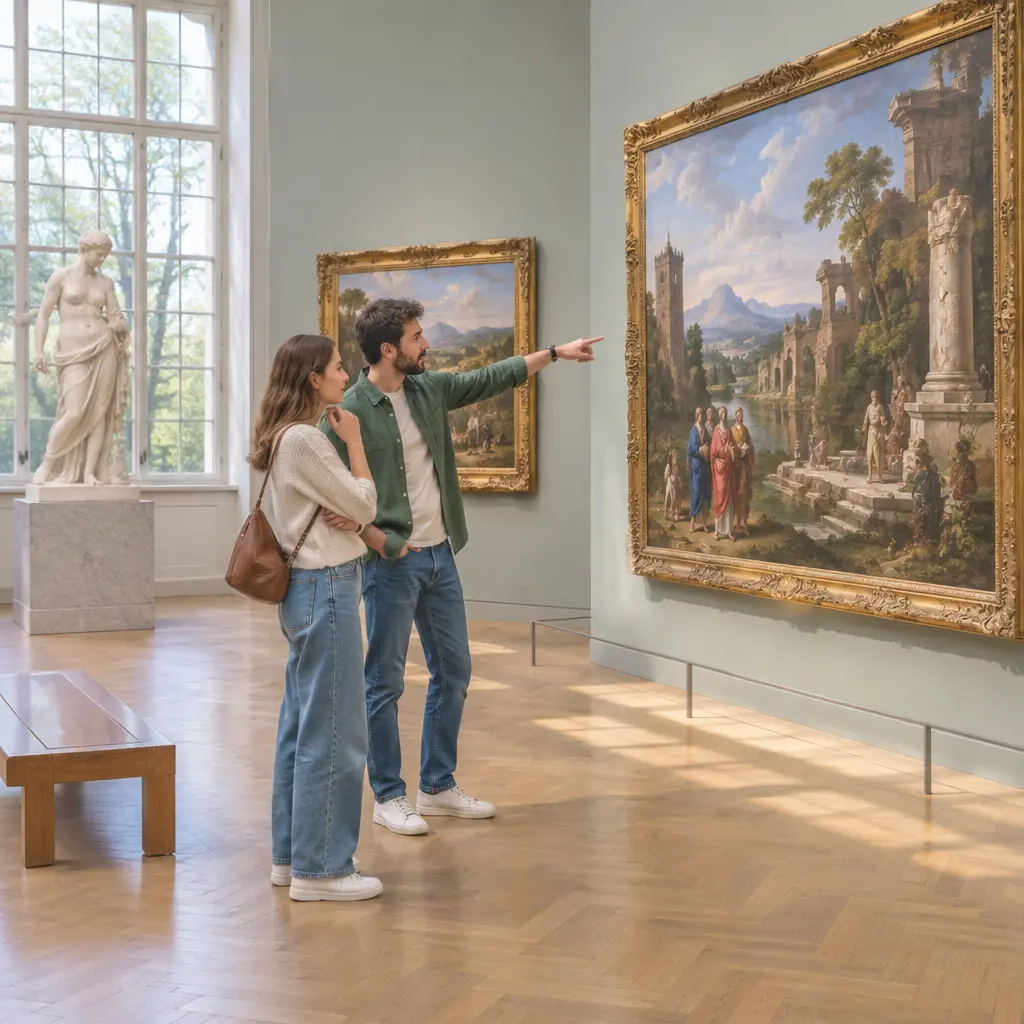
Art conversation is the practice of noticing, describing, and discussing what an artwork makes visible or meaningful; it is not a test of specialist knowledge. You can talk about art without feeling intimidated by starting with what you see, explaining what you notice, and asking open questions rather than trying to guess the “right” interpretation. This approach fits how museums invite visitors to look closely and make meaning for themselves, and it matters because art is encountered widely: the National Endowment for the Arts reported that 52.2% of U.S. adults attended an art exhibit, craft fair, or visual-arts festival in 2022. A few simple habits—observation, interpretation, context, and respectful conversation—can make those encounters more rewarding.
Build confidence through art conversation
Art conversation is a way of making sense of an artwork together. It can include visual description, personal response, interpretation, and research into an artwork’s history. These are related but distinct activities: describing what is present is different from explaining what it means, and both are different from checking facts about its maker or period.
The best starting point is not expertise but attention. The Visual Thinking Strategies (VTS) approach, developed by psychologist Abigail Housen and museum educator Philip Yenawine, uses open-ended questions such as “What’s going on in this picture?” and “What do you see that makes you say that?” The questions encourage viewers to support interpretations with visible evidence. They also make room for different responses without implying that every idea is equally supported by the work.
That distinction is useful in any setting, from a gallery visit to a conversation about a poster, photograph, sculpture, or digital image. Instead of worrying about whether you know the artist’s intention, you can explain what led you to your reading and remain open to other possibilities.
Use observation as the foundation of art conversation
Observation means describing features that can be seen or otherwise directly experienced before moving to conclusions about their meaning. In art conversation, it supplies a shared starting point: viewers may disagree about a work’s message, but they can often begin by comparing what they notice in its colors, shapes, materials, scale, or arrangement.
The National Gallery of Art’s teaching resources similarly encourage close looking and discussion as ways to engage with works of art. A practical sequence is to notice a detail, describe it specifically, and then explain why it caught your attention. That sequence makes comments easier to follow and gives others something concrete to respond to.
Describe what is visible
Visual description names observable elements without immediately assigning them a story. You might say, “The figure is near the edge of the canvas,” “The background is mostly dark,” or “The brushstrokes look loose and visible.” These statements are more useful than “It’s weird” because they identify what prompted your reaction.
Useful details include subject matter, line, shape, color, texture, light, composition, medium, and scale. You do not need to use technical vocabulary. Everyday language is enough: “the colors clash,” “the surface looks rough,” or “my eye keeps moving toward the bright area.” If you are unsure whether something is a fact or an inference, phrase it cautiously: “It looks as though…”
Separate evidence from interpretation
Interpretation is a reasoned proposal about what an artwork might communicate, suggest, or leave unresolved. A strong interpretation connects an idea to something in the work: “The empty space around the person makes the scene feel isolated to me.” The phrase “to me” signals that this is a response, while the visual detail gives it a basis.
Interpretations can differ because viewers bring different experiences and cultural knowledge. That does not mean every reading is automatically equally persuasive. A reading becomes stronger when it accounts for more of the work’s details and can be discussed alongside reliable information about its context. If another person sees something different, try asking, “Which detail led you there?” rather than treating disagreement as a contest.
Discuss personal response and meaning without needing a single right answer
Personal response is the feeling, memory, or association a viewer brings to an artwork. It is a legitimate part of art conversation, though it is distinct from a claim about the artist’s intentions or the historical facts surrounding the work. Naming that difference lets you share your response confidently without presenting it as the only possible meaning.
Museum discussion methods often treat looking as an active process: viewers build ideas from observation and revise them as they notice more. You can do the same by asking what first drew your attention, what changed as you kept looking, and which details support your reaction. If the work leaves you puzzled or unmoved, that is also a useful response to explore.
Use open-ended questions
An open-ended question invites more than a yes-or-no answer and encourages continued looking. Try “What do you notice first?”, “How does the scale affect the experience?”, or “What might the repeated shapes be doing?” Questions that begin with “what,” “how,” or “where” are often less intimidating than questions that demand a technical label.
VTS uses questions designed to help viewers support ideas with evidence and consider multiple perspectives. In a casual conversation, you can adapt the same spirit: listen to the answer, ask what prompted it, and return to the artwork together. Avoid turning questions into a quiz—“Do you know what period this is?” can make a conversation feel like an exam rather than shared exploration.
Make room for uncertainty and disagreement
Uncertainty is a reasonable response when an artwork is ambiguous, unfamiliar, or deliberately open to interpretation. You might say, “I’m not sure what’s happening, but the contrast between the tiny figure and the huge landscape feels important.” This combines honesty with attention, rather than pretending to know more than you do.
Disagreement can deepen a discussion when people compare the evidence behind their interpretations. One viewer may focus on a figure’s expression while another notices the setting or materials. Treat each view as a possibility to examine, not as a verdict to accept or defeat. If a claim concerns a specific historical event, identity, or artist’s intention, distinguish personal interpretation from verifiable information.
Add context to art conversation with curiosity
Art context is information about the circumstances surrounding a work, such as its maker, date, medium, place of production, intended use, or historical setting. Context can sharpen an interpretation, but it does not replace looking. A helpful order is to notice the work first, develop a question, and then seek context that may answer it.
Museum labels and collection records are useful starting points because they can identify materials, dates, provenance, and relevant historical information. Institutions such as the National Gallery of Art and the Metropolitan Museum of Art publish collection and learning resources that help viewers investigate works further. When sources disagree or details are uncertain, say so rather than presenting a guess as established fact.
Use art vocabulary only when it helps
Art vocabulary is a set of terms for describing visual choices and materials. Words such as “composition” (the arrangement of elements), “contrast” (a noticeable difference), and “medium” (the material or process used) can make a point more precise, but they are tools—not prerequisites for joining a discussion.
If you do not know a term, describe the effect in ordinary language or ask what it means. For example, instead of trying to name a painting technique, you can say, “The paint seems thick and raised from the surface.” The goal is clear communication, not displaying a vocabulary list.
Ask about history, maker, and purpose
Questions about a work’s maker, date, audience, and purpose can connect what you see to broader social and historical conditions. You might ask, “Was this made for a particular place?” or “What do we know about the materials and who used them?” Such questions are especially valuable when a work’s meaning depends on cultural practices or historical circumstances that are not obvious from its appearance.
A real-world example is a museum conversation about a portrait. First, viewers might describe the sitter’s pose, clothing, and placement. They could then suggest what those choices communicate about status or personality, while treating that suggestion as an interpretation. Finally, they can consult the museum’s label or collection record to learn who commissioned the portrait and what is known about its setting. The sequence keeps observation, interpretation, and documented context in conversation without confusing them.
Put a low-pressure art conversation into practice
A simple routine can make a gallery visit or informal discussion feel more manageable. Spend a moment looking before reading the label, choose one detail to describe, share a response with evidence, and ask another person what they notice. Then revisit the work after learning something about its context. This approach gives each participant a way in, whether they are new to art or already familiar with it.
- Look quietly and notice your first response.
- Name two or three visible details before explaining what they might mean.
- Use a phrase such as “I think…” or “I wonder…” to mark an interpretation as a possibility.
- Ask an open question and listen for the details behind another person’s view.
- Check a museum label or trusted source when the conversation turns to factual history.
The National Endowment for the Arts’ 2022 survey found that 52.2% of U.S. adults attended an art exhibit, craft fair, or visual-arts festival that year. The figure underscores how common visual-art experiences are, but meaningful conversation does not require a museum visit or formal training. A public mural, family photograph, book illustration, or design object can all prompt the same habits of looking and asking.
Conclusion: Talk about art with attention, not intimidation
Confident art conversation begins with observation, develops through evidence-based interpretation, makes space for personal response, and uses context to deepen understanding. You do not have to identify a style or discover a single hidden message to contribute. Describe what you notice, explain what it suggests to you, and stay curious about how others see it.
The broader value is not only learning about artworks; it is practicing careful attention, clear reasoning, and respectful exchange. Next time you encounter a work, pause before judging it, choose one detail to discuss, and ask someone what they see. For further exploration, consult museum learning resources and collection records from the National Gallery of Art, the Metropolitan Museum of Art, and Visual Thinking Strategies.
Sources: National Endowment for the Arts, Arts Participation Patterns in 2022: A Decade of Change, https://www.arts.gov/impact/research/publications/arts-participation-patterns-2022-decade-change; Visual Thinking Strategies, How to Look at Art, https://vtshome.org/; National Gallery of Art, Teaching Resources, https://www.nga.gov/learn/teachers.html; The Metropolitan Museum of Art, Heilbrunn Timeline of Art History, https://www.metmuseum.org/toah/
Related Post
Inside the Studio, How Artists Assess Their Own Finished Pieces
Artists assess finished pieces by comparing what they see with what they intended, then weighing [...]
The Emotional Pull Of Painted Skies And Open Horizons
Painted Skies—Emotional Pull Across Art, Psychology, and Open Horizons Painted skies are visual representations of [...]