
How Museums Decide What Gets Exhibited
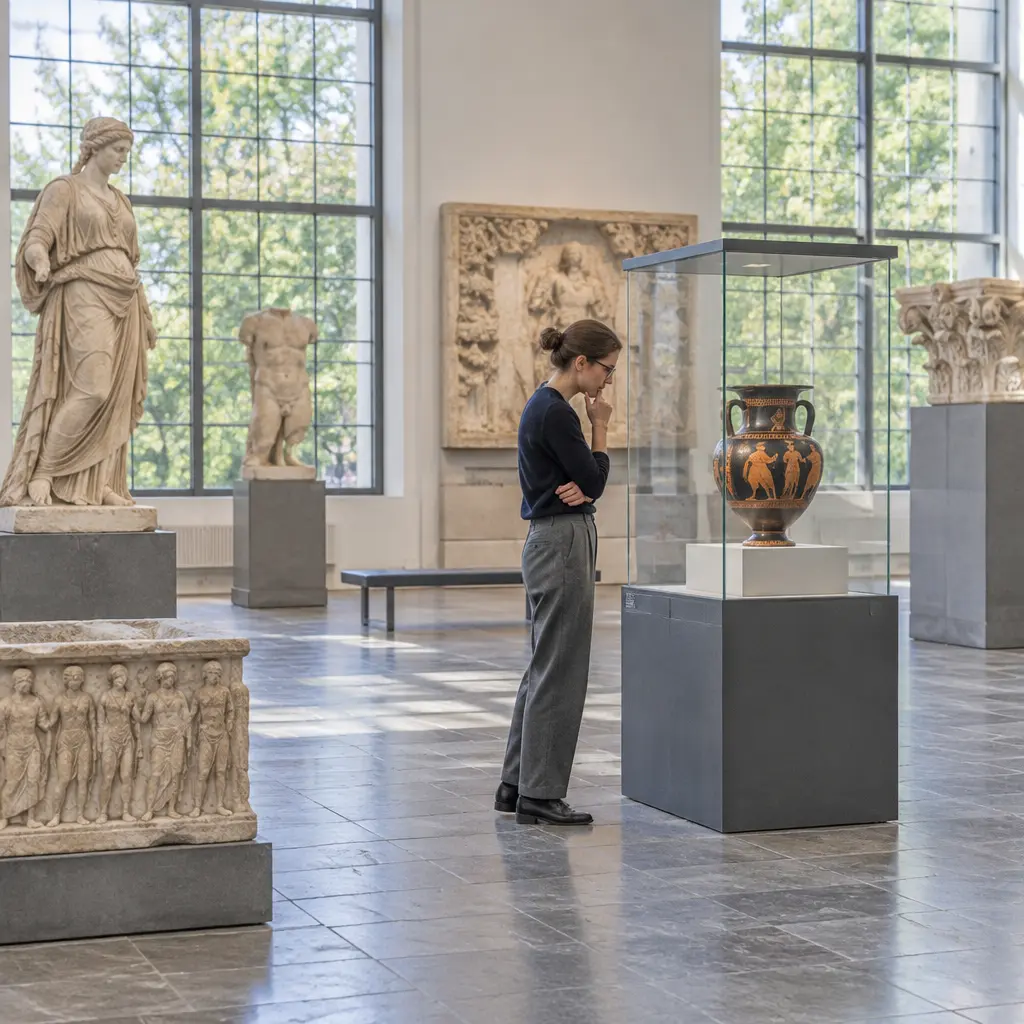
Museums decide what gets exhibited through a combination of mission, research, collection care, available space and funding, ethical responsibility, and public relevance. The process is not simply a matter of choosing popular objects: museum professionals assess an item’s history and significance, consider whose perspectives it represents, and determine whether it can be displayed responsibly. The International Council of Museums reported that the world had about 104,000 museums in 2021, underscoring the scale and diversity of institutions making these choices. Looking at selection criteria, curatorial and community input, practical constraints, and examples of contested interpretation helps explain how exhibitions take shape—and why those decisions matter.
Museum exhibition decisions: the selection process
An exhibition decision is the documented choice to present particular objects, stories, or ideas to the public in a defined space and interpretive framework. The American Alliance of Museums’ professional guidance emphasizes that museums should serve the public and act responsibly in the care and interpretation of collections. In practice, selection is usually a collaborative process rather than a single curator’s choice. Curators, conservators, educators, registrars, designers, executives, and sometimes community advisers contribute expertise at different stages.
A candidate object may be important because it is rare, historically consequential, representative of a larger story, or connected to a community. Those qualities do not automatically make it suitable for display: the object must also be authentic, documented, safe to exhibit, legally held, and relevant to the exhibition’s purpose. Museums therefore weigh interpretive value against practical and ethical responsibilities.
Mission and interpretive purpose
Mission alignment means that an object or story supports the museum’s stated purpose and the exhibition’s specific question. An art museum might select works to show a movement’s development, while a history museum might use documents and material objects to explain a local event. A clear interpretive purpose helps teams avoid assembling a display merely because its objects are attractive or available.
Curators commonly begin with a thesis or organizing question, then identify the evidence visitors need to understand it. The process can include checking provenance—the history of an object’s ownership and transfer—and assessing whether records support the interpretation. This research is especially important when objects have been acquired through colonial-era collecting, wartime displacement, or transactions whose circumstances are unclear.
Significance, evidence, and collection priorities
Significance is the reason an object merits attention in a particular exhibition. It may derive from its cultural meaning, artistic achievement, scientific information, connection to a person or event, or ability to make an underrepresented history visible. Selection is strongest when claims about significance are grounded in reliable documentation and consultation rather than assumption.
A collection can contain many objects that are not displayed at any one time. Museums rotate works to manage space, preserve fragile materials, and present different parts of their holdings. For example, paper, textiles, photographs, and light-sensitive artworks may require limited exposure to light. The American Institute for Conservation’s preventive-care guidance treats light, temperature, humidity, pollutants, and handling as factors that can affect an object’s condition; the display plan must therefore fit the material, not just the exhibition concept.
Museum exhibition decisions: ethics and representation
Once a museum has established why an object might belong in an exhibition, it must consider how displaying it affects people connected to its history. Ethical selection asks not only “What does this object show?” but also “Who has authority to interpret it, who may be harmed by its display, and what responsibilities follow from holding it?” These questions have become increasingly visible in debates over restitution, sacred objects, human remains, and historical labels.
Community consultation and shared authority
Community consultation is the process of seeking knowledge and perspectives from people whose histories, identities, or cultural practices are represented. It can involve interviews, advisory groups, co-curation, public meetings, or review of exhibition text. Consultation is most meaningful when it begins early enough to influence what is selected and how it is interpreted, rather than being used only to approve a nearly finished display.
The practice recognizes that museum expertise is not the only relevant expertise. Descendant communities, artists, cultural practitioners, and local residents may identify meanings or sensitivities that collection records do not capture. The National Museum of the American Indian’s collaborative work with Indigenous communities is one prominent example of a museum approach that foregrounds consultation and Indigenous perspectives in interpreting Native histories and cultures.
Provenance, restitution, and sensitive material
Provenance research investigates an object’s ownership history, acquisition circumstances, and legal or ethical status. It is central to deciding whether an object should be exhibited, whether its interpretation needs qualification, or whether it should be returned. The International Council of Museums’ Code of Ethics for Museums calls on institutions to make every effort to establish the provenance of objects before acquisition and to address claims for return in a responsible manner.
The 1970 UNESCO Convention provides an international framework for preventing and addressing the illicit import, export, and transfer of cultural property. It does not resolve every historical claim, but it has helped shape museum policies and due diligence. For human remains, funerary objects, and sacred materials, responsible practice may mean restricting access, consulting source communities, changing labels, or choosing not to display an item at all. Ethical exhibition-making includes the possibility of non-display.
Representation, omission, and interpretive balance
Representation concerns whose experiences appear in an exhibition and how they are described. A display can reproduce familiar narratives by repeatedly featuring powerful individuals and institutions while leaving out workers, colonized peoples, women, or other groups. Curators may address such omissions by expanding the range of objects, including multiple viewpoints, and explaining gaps in the historical record rather than presenting a single account as complete.
Balance does not require giving every claim equal weight. It requires explaining the evidence, identifying disagreement where it exists, and avoiding false equivalence between well-supported scholarship and unsupported assertions. Labels, audio, digital resources, and facilitated programs can provide context that an object alone cannot communicate.
Museum exhibition decisions: operations and audience needs
A compelling exhibition idea still has to work in a real building, within a budget and schedule, and for visitors with different needs. Museums assess object condition, insurance and transport, security, rights, installation requirements, accessibility, and staff capacity. These constraints influence not only which objects appear but also how long they remain on view and what supporting interpretation is provided.
Conservation, space, and cost
Conservation review determines whether an object can tolerate the proposed environment and handling. A fragile object might require a sealed case, low illumination, specialized mounts, or a shorter display period. A large sculpture may need structural assessment, while a loan from another institution can require transport planning, insurance, and condition reporting. If the risk or expense is excessive, a high-value object may be represented through a photograph, replica, or digital model instead.
Space also shapes selection. Galleries have limits on floor area, sightlines, visitor flow, and the weight that walls or floors can support. Exhibition teams use plans and mock-ups to test how objects, text, seating, and accessible routes fit together. A graph or floor-plan diagram can make these trade-offs visible by showing how gallery area is divided among objects, circulation, and interpretive material.
Accessibility and visitor experience
Accessibility means designing exhibitions so that people with different physical, sensory, cognitive, and language needs can participate. Decisions may include clear sightlines, seating, large-print or Braille materials, captions, audio description, tactile elements, plain-language labels, and step-free routes. The Smithsonian Guidelines for Accessible Exhibition Design offer practical guidance for incorporating access into planning rather than treating it as a late addition.
Audience research can help museums understand whether visitors can follow an exhibition’s central ideas and whether the experience works for different groups. Visitor surveys and evaluation do not dictate what a museum should show, but they can reveal confusing language, inaccessible layouts, or subjects that merit deeper explanation. The American Alliance of Museums’ accreditation and professional resources similarly stress institutional learning, stewardship, and public service as connected responsibilities.
Funding, loans, and institutional priorities
Exhibition budgets affect research, design, conservation, transport, interpretation, and public programming. A museum may rely on internal funds, grants, sponsorship, or partnerships, and each source can shape the scale and timing of a project. Professional standards call for transparency and for protecting scholarly integrity; financial support should not determine an exhibition’s conclusions or suppress relevant evidence.
Loans can broaden an exhibition by bringing together objects held in different collections, but they add negotiation, insurance, shipping, and conservation requirements. A museum may also choose a smaller exhibition or a digital presentation when the cost or risk of borrowing is too high. These are not merely logistical decisions: they influence which stories visitors encounter and which remain less visible.
Museum exhibition decisions: examples and changing practice
Real-world exhibitions show how selection criteria evolve as scholarship and public expectations change. Museums increasingly explain not only what is on view but how objects entered collections, how interpretations were developed, and where evidence remains incomplete. Such transparency can build trust while making clear that exhibition narratives are researched interpretations rather than neutral windows onto the past.
The National Museum of African American History and Culture
The National Museum of African American History and Culture, which opened in Washington, D.C., in 2016, illustrates the challenge of representing a broad history through a finite selection of objects. Its exhibitions connect material culture with slavery, emancipation, segregation, cultural achievement, and contemporary life. The museum’s collection and interpretation demonstrate why curators need objects that carry individual stories as well as evidence of larger social and historical structures.
The Smithsonian Institution reported that the museum welcomed about 1.9 million visitors in its first year. That figure shows the public reach an exhibition can achieve, while also highlighting the importance of interpretation that is historically grounded and accessible to varied audiences. Visitor numbers alone do not measure representational quality, but they help explain why exhibition choices receive broad attention.
The Benin Bronzes and contested ownership
The Benin Bronzes—objects made in the Kingdom of Benin, in present-day Nigeria, many of which were looted by British forces in 1897—show how provenance and restitution can change exhibition decisions. Museums holding such works have faced questions about whether display without adequate context perpetuates a colonial account of their acquisition. Some institutions have returned objects or entered into agreements with Nigerian authorities, while others have revised labels and provenance information as claims are assessed.
This case demonstrates that an object’s significance does not settle the question of whether a museum should retain or display it. Historical research, legal frameworks, source-community perspectives, and institutional accountability all matter. A responsible exhibition can explain the object’s artistic and historical importance while also addressing the violence through which it entered a collection.
Digital exhibitions and expanded access
Digital exhibitions use online collections, high-resolution images, audio, video, and interactive tools to present material beyond gallery walls. They can extend access to people unable to visit, provide room for additional context, and reduce the need to expose a fragile object to light. Digital formats do not replace physical exhibitions, and they raise their own questions about image rights, representation, and technology access, but they can complement in-gallery interpretation.
The COVID-19 pandemic accelerated museums’ use of virtual tours and online collection platforms as buildings closed or limited attendance. The American Alliance of Museums documented the sector’s severe financial and operational pressures during the pandemic, making digital engagement both an access strategy and a practical means of maintaining contact with audiences. The experience also showed that exhibition planning increasingly includes decisions about what can be shared online, in what form, and with whose permission.
Conclusion: exhibition choices shape public memory
Museums decide what gets exhibited by combining mission and evidence with ethical judgment, conservation needs, budgets, space, and audience access. Curatorial significance identifies why an object matters; provenance and consultation help establish whether and how it should be shown; practical planning determines whether display is safe and feasible. Case studies from the National Museum of African American History and Culture and debates over the Benin Bronzes illustrate that exhibition decisions can influence public understanding of history and ownership.
Because exhibitions shape what societies remember, museums should make their reasoning visible, consult affected communities early, explain uncertainty, and regularly review whose stories are absent. Readers can explore a local museum’s collection policies, provenance statements, and exhibition labels to see these decisions at work—and ask how the institution supports stewardship, access, and accountability.
Sources: International Council of Museums, “Museums, museum professionals and COVID-19: third survey,” 2021, https://icom.museum/en/news/museums-museum-professionals-and-covid-19-third-survey/; American Alliance of Museums, “Code of Ethics for Museums,” https://www.aam-us.org/programs/ethics-standards-and-professional-practices/code-of-ethics-for-museums/; American Institute for Conservation, “Guidelines for Practice,” https://www.culturalheritage.org/about-conservation/code-of-ethics; International Council of Museums, “ICOM Code of Ethics for Museums,” https://icom.museum/en/resources/standards-guidelines/code-of-ethics/; UNESCO, “Convention on the Means of Prohibiting and Preventing the Illicit Import, Export and Transfer of Ownership of Cultural Property,” https://www.unesco.org/en/legal-affairs/convention-means-prohibiting-and-preventing-illicit-import-export-and-transfer-ownership-cultural; Smithsonian National Museum of the American Indian, “Our Work,” https://americanindian.si.edu/explore/our-work; Smithsonian National Museum of African American History and Culture, “About the Museum,” https://nmaahc.si.edu/about/news; Smithsonian Institution, “National Museum of African American History and Culture welcomes 1.9 million visitors in first year,” https://www.si.edu/newsdesk/releases/national-museum-african-american-history-and-culture-welcomes-19-million-visitors-first; Smithsonian, “Smithsonian Guidelines for Accessible Exhibition Design,” https://www.si.edu/accessibility/smithsonian-guidelines-accessible-exhibition-design; UNESCO, “Benin Bronzes,” https://www.unesco.org/en/articles/benin-bronzes; American Alliance of Museums, “National Survey of COVID-19 Impact on United States Museums,” https://www.aam-us.org/2020/07/22/national-survey-of-covid-19-impact-on-united-states-museums/.
Related Post

How Young Artists Catch The Eye Of Top Galleries
Young artist visibility is the combination of an emerging artist’s recognizable practice, credible professional validation, [...]
The Careful Process Of Selecting Work For A Show
Curatorial selection is the deliberate process of choosing, organizing, and contextualizing artworks for public presentation. [...]