What Is an Art Movement? Contemporary Movements Explained
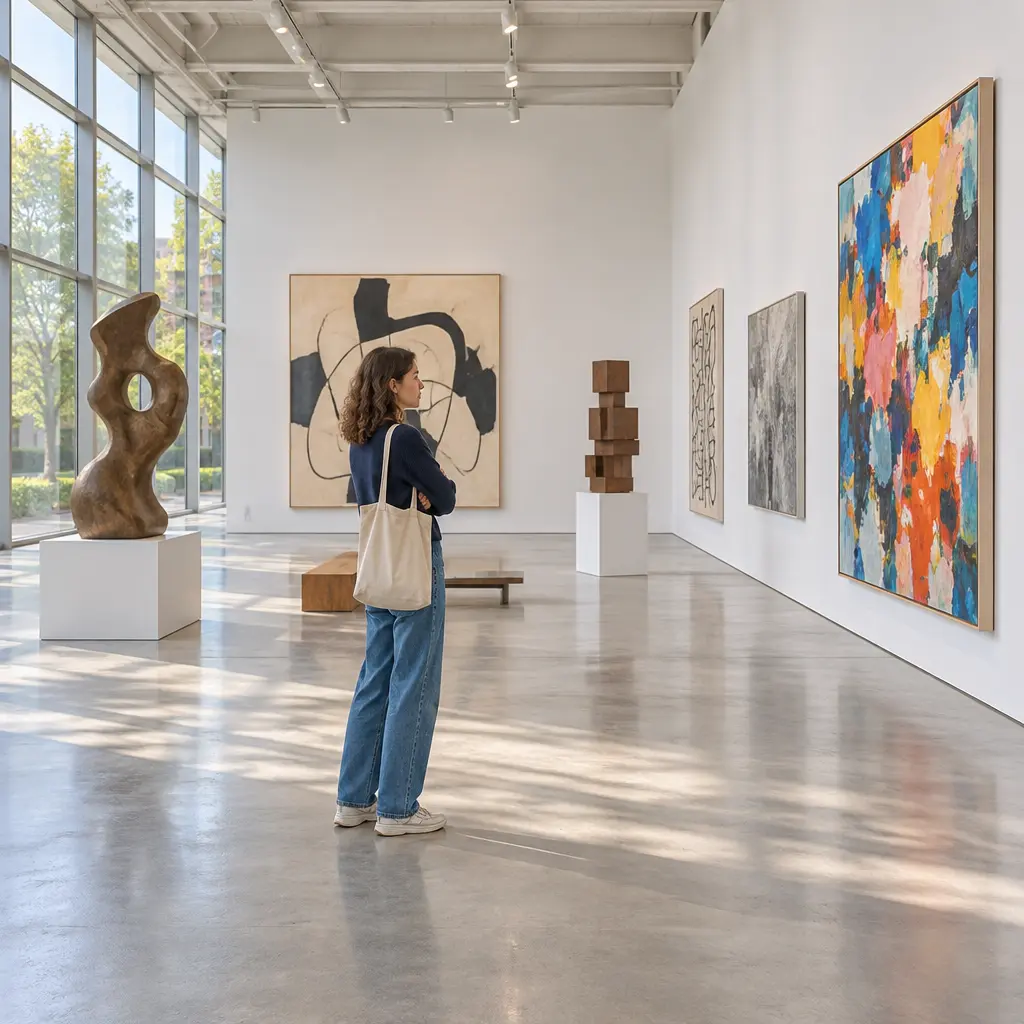
An art movement is a group of artists, works, or ideas linked by shared visual approaches, aims, or historical circumstances. Contemporary art movements are less likely than earlier movements to follow one unified manifesto: they overlap across regions and media, and may be identified through recurring practices such as conceptual art, digital art, socially engaged art, and Afrofuturism. Understanding what makes a movement—and how its labels are formed—helps readers interpret modern artworks, while institutions such as the Museum of Modern Art (MoMA) and the Tate provide historical context for these changing categories.
Art movement: definition and distinguishing attributes
An art movement is a recognizable tendency in art associated with a particular period, community, or set of ideas. The Tate describes movements as groups of artists who share a style or aim, while noting that the term can also refer to broader developments in art. A movement may be organized around a manifesto, as Futurism was, or emerge retrospectively when critics and historians identify common features across artists’ work.
Movements are not simply lists of artists who look alike. Their connections can involve subject matter, materials, political commitments, methods of exhibition, or responses to technology and social change. Artists may participate in more than one movement, reject the label applied to them, or work outside any movement altogether. These overlapping relationships are especially visible in contemporary art, where global exchange and digital communication make artistic categories less geographically and stylistically fixed.
Shared characteristics, not strict membership
A movement generally has recurring characteristics that make it recognizable, but rarely has rules that every artist follows. Some movements gather around a manifesto or group exhibition; others are connected mainly by a common response to historical conditions. Dada, for example, developed amid the destruction and disillusionment of the First World War, while Pop Art drew on advertising, consumer products, and mass media.
The label can be useful, but it can also simplify differences. An artist’s work may share a movement’s concerns without matching its signature appearance. For that reason, movement names work best as interpretive tools rather than as complete explanations of an artwork.
Movement, style, period, and school
A style describes recurring visual qualities, such as brushwork, color, or composition. A period identifies a broad historical span, and a school often refers to artists connected through a place, teacher, or institution. A movement can include elements of all three, but usually implies a shared direction or purpose. Impressionism, for instance, names both a recognizable approach to painting and a group of artists who exhibited together in nineteenth-century Paris.
Contemporary art movements: plural, connected, and changing
Contemporary art movements are current or relatively recent developments in artistic practice, broadly shaped by the late twentieth and twenty-first centuries. “Contemporary art” does not mean one single movement; it is a broad historical category covering many styles, media, and perspectives. The National Endowment for the Arts’ 2022 Survey of Public Participation in the Arts reported that 48.3% of U.S. adults attended at least one visual or performing arts event in person during the prior year. That measure does not count every encounter with art, especially online, but it illustrates the scale of public engagement with the arts.
Today’s movements often overlap rather than proceed in a neat sequence. A work might combine digital tools, conceptual strategies, ecological concerns, and references to local histories. The categories below are therefore useful entry points, not an exhaustive or mutually exclusive list.
Conceptual art: the idea as the central work
Conceptual art gives priority to an artwork’s idea, instructions, or framework rather than to its physical appearance alone. The approach became prominent in the 1960s, challenging the assumption that art must be a unique, handcrafted object. Joseph Kosuth’s One and Three Chairs (1965), which presents a chair alongside a photograph and a dictionary definition of “chair,” demonstrates how an artwork can examine representation and meaning.
Conceptual methods remain influential in installations, text-based works, performance, and digital art. They also help explain why a contemporary artwork may consist of documentation, a temporary action, or an instruction that can be carried out in different places.
Digital art and new media: art made with networked technologies
Digital art uses computer-based processes, software, networks, or electronic devices as part of an artwork’s creation or presentation. It includes interactive installations, generative images, virtual environments, internet-based projects, and works involving artificial intelligence. These forms extend older artistic concerns with image-making and participation while raising new questions about authorship, data, access, and preservation.
A useful historical example is MoMA’s acquisition of My Boyfriend Came Back from the War by Olia Lialina, an early net-art work first created in 1996. Its browser-based structure shows how online art can use the format and behavior of the web as artistic material. Digital works can also be difficult to preserve because software, hardware, and file formats become obsolete.
Socially engaged art: participation and public life
Socially engaged art involves people, communities, or public institutions as active participants in an artistic process. Rather than treating the finished object as the only outcome, practitioners may focus on conversation, collaboration, shared resources, or civic action. Suzanne Lacy’s long-term projects and community-based performances are often discussed in relation to this approach.
The practice connects contemporary art with public art, activism, education, and community organizing. Its effects can be difficult to measure using conventional art-market or attendance statistics: a project’s significance may lie in relationships formed or local issues made visible, not in a collectible object.
Afrofuturism: Black histories and imagined futures
Afrofuturism is a cultural movement and critical approach that brings together African diasporic histories, speculative fiction, technology, and visions of the future. It appears in visual art, music, literature, film, fashion, and design. Artists and thinkers associated with the term use speculative worlds to reconsider histories of enslavement and colonialism, and to imagine futures shaped by Black experience and agency.
The term became widely established through cultural criticism, including Mark Dery’s 1994 essay “Black to the Future.” In visual art, artists such as Wangechi Mutu have explored hybrid bodies, mythology, science fiction, and the politics of representation. Afrofuturism illustrates how a movement can be both an aesthetic tendency and a way of interpreting history and power.
Environmental and ecological art: responding to planetary change
Environmental art engages with land, ecosystems, climate, and human relationships with the natural world. It can take the form of landscape interventions, community projects, installations made from reused materials, or artworks that communicate environmental research. The category connects to land art, ecological art, and climate-focused practice, though those terms are not interchangeable in every context.
Agnes Denes’s Wheatfield—A Confrontation (1982), a wheat field planted on landfill in lower Manhattan, brought agriculture and environmental questions into a prominent urban setting. Contemporary ecological artists continue to use art to make complex issues visible, while also confronting the challenge of producing work without reproducing the waste or resource consumption it critiques.
How art movements form, spread, and gain recognition
A movement may begin through shared experimentation, a political or technological shift, or a group of artists who meet and exhibit together. Critics, curators, museums, universities, galleries, and audiences then help circulate the work and establish the language used to discuss it. Some labels are adopted by artists themselves; others are applied later by historians or the art market.
Manifestos, exhibitions, and critical writing
Manifestos make a movement’s aims explicit, while exhibitions make related works visible together. The 1909 Futurist Manifesto, published by F. T. Marinetti, promoted speed, machinery, and modernity; the 1913 Armory Show introduced many American viewers to modern European art. These examples show how writing and exhibition can help define a movement, although neither guarantees that artists share a single outlook.
Technology, institutions, and the movement’s afterlife
New technologies can change what artists make and how audiences encounter it, from photography and film to the internet and immersive media. Institutions preserve selected works and frame them for future audiences, while critics and scholars revisit earlier classifications. This process can expand a movement’s history by recognizing artists and regions that earlier accounts overlooked.
The result is not a fixed canon. Movement histories are revised as museums reassess collections, archives become accessible, and artists challenge inherited categories. Contemporary movements are especially open to revision because many of their works, communities, and debates are still developing.
A practical way to interpret an art movement
When encountering a movement label, ask what it explains and what it leaves out. Consider the work’s historical setting, materials, visual choices, stated intentions, and relationship to other artists. Then check who coined or popularized the label and whether the artist accepted it. This approach helps distinguish a useful historical connection from a convenient but overly broad category.
For a quick comparison, a chart could place movements in rows and compare their approximate dates, central concerns, common media, and representative examples. Such a chart should note overlaps rather than imply that each movement has a single starting point or a clear ending.
Conclusion: art movements as tools for understanding change
An art movement is a shared tendency shaped by ideas, artistic choices, and historical circumstances—not simply a uniform look. Contemporary movements such as conceptual art, digital art, socially engaged art, Afrofuturism, and ecological art show how artists respond to technology, identity, community, and environmental change. Their boundaries overlap, and their histories continue to be reconsidered by artists, audiences, and institutions.
To explore further, compare works from different movements, read museum and artist accounts, and pay attention to how labels are used. Looking closely at both the artwork and the context behind its classification makes movement history more accurate, inclusive, and relevant.
Sources: Tate, “Art Term: Movement,” https://www.tate.org.uk/art/art-terms/m/movement; National Endowment for the Arts, 2022 Survey of Public Participation in the Arts, https://www.arts.gov/impact/research/arts-data-profile-series/adp-31; Museum of Modern Art, “Joseph Kosuth. One and Three Chairs. 1965,” https://www.moma.org/collection/works/81435; Museum of Modern Art, “Olia Lialina. My Boyfriend Came Back from the War. 1996,” https://www.moma.org/collection/works/177116; Mark Dery, “Black to the Future: Interviews with Samuel R. Delany, Greg Tate, and Tricia Rose,” 1994; Agnes Denes, “Wheatfield—A Confrontation,” https://www.agnesdenesstudio.com/works/wheatfield-a-confrontation/; Encyclopaedia Britannica, “Futurism,” https://www.britannica.com/art/Futurism; Smithsonian American Art Museum, “The Armory Show at 100,” https://americanart.si.edu/exhibitions/armory-show.
Related Post

From Global Issues To Personal Stories In Living Art Practices
Living art practices are artistic methods that use embodied experience, social relationships, participation, and changing [...]
Building Depth Through Repetition And Variation
Writing depth through repetition and variation is the deliberate development of meaning, coherence, and emotional [...]