
How Social Media Changed Who Gets to Be an Artist
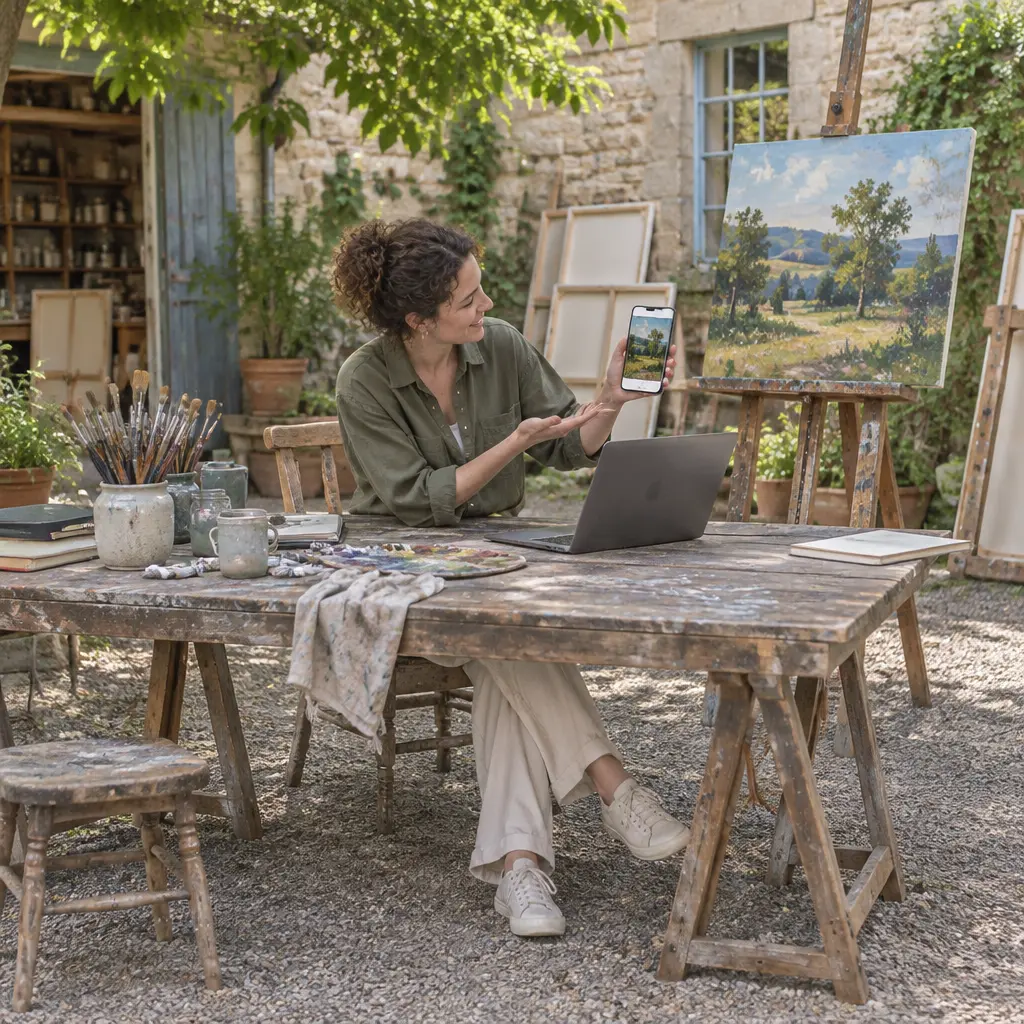
Social media changed who gets to be an artist by making publishing and audience-building possible without first securing a gallery, record label, publisher, or major studio. Platforms such as Instagram, TikTok, YouTube, and SoundCloud let creators show work directly to the public, while recommendation algorithms can help unfamiliar artists reach large audiences. That access is significant: DataReportal estimated that 5.24 billion social media user identities existed worldwide in January 2025, although identities are not necessarily unique people. The shift has broadened visibility and created new routes to income, but it has not removed gatekeeping; platforms, algorithms, advertising markets, and unequal access to time and technology now shape who is seen and paid.
Social Media Access: From Institutional Gatekeepers to Direct Publishing
Social media access is the ability to publish creative work and connect with audiences through networked platforms without needing a traditional cultural institution to distribute it. Communication scholar danah boyd describes social network sites as networked publics: spaces where people gather and where technology shapes how content and interaction circulate. Applied to artists, this means the route from making work to finding an audience can run through a profile, video, livestream, or post rather than a gallery, broadcaster, or publisher.
The change is best understood as a redistribution, not an elimination, of gatekeeping. Artists can publish independently, but platforms still control the rules, interfaces, recommendation systems, and monetization options that influence reach. The practical forms of access include self-publishing, direct audience communication, and community-based discovery.
Self-publishing and low-cost distribution
Self-publishing means releasing creative work through a creator-controlled account rather than waiting for a commissioning institution to approve or distribute it. A photographer can post a portfolio, a musician can upload a track, and an animator can serialize short films. These tools lower some distribution barriers, though they do not make production cost-free: equipment, software, internet access, workspace, and unpaid promotional labor still matter.
The global scale of social media helps explain its importance. DataReportal’s January 2025 estimate of 5.24 billion social media user identities indicates a vast potential audience, but it should not be read as 5.24 billion distinct individuals or as a guarantee that any particular post will be seen. Artists compete for attention within crowded feeds, and the platform determines much of the distribution environment.
Direct relationships with audiences
Direct audience communication is the ability to speak with viewers, listeners, or readers without relying entirely on an intermediary. Comments, livestreams, newsletters, and membership tools can help creators gather feedback, announce releases, and build a community around recurring work. This can turn an audience from a distant market into an active part of an artist’s practice.
Direct connection does not necessarily mean direct ownership of the relationship. A creator may have many followers yet lack access to their contact details, and a platform policy change can reduce the visibility of posts overnight. For that reason, many working artists use social media alongside mailing lists, personal websites, events, and other channels.
Community discovery beyond traditional institutions
Community discovery occurs when people encounter artists through shared interests, peer recommendations, hashtags, niche groups, or reposts rather than through formal arts organizations. It can make room for experimental styles and creators whose work does not fit established commercial categories. Online communities also allow artists separated by geography to exchange techniques, collaborate, and find audiences with specific interests.
This widened access leads to another change: the public image of an artist is no longer limited to a finished work. Platforms reward frequent participation, making process, personality, and ongoing conversation part of how creative careers are presented.
Artist Visibility: How Platforms Turn Attention into Recognition
Artist visibility is the degree to which a creator and their work are encountered, recognized, and remembered by an audience. It is distinct from artistic quality: a strong work can remain unseen, while a highly visible post may become popular for reasons beyond craft. Visibility on social media is shaped by platform design, recommendation systems, audience behavior, and the creator’s ability to package work for a particular format.
The main routes to visibility include algorithmic recommendation, short-form and serialized storytelling, and a recognizable creator identity. Each can help an artist reach people outside an existing network, while also encouraging adaptation to platform conventions.
Algorithmic recommendation and discovery
Algorithmic recommendation is the automated selection and ranking of content for users, often based on signals such as viewing behavior, engagement, and predicted interest. Unlike a traditional gatekeeper who selects a limited roster, a recommendation system can distribute a post to audiences who do not follow its creator. This creates an opening for newcomers, but the system’s criteria are often opaque and can change without notice.
Pew Research Center’s 2024 research on news influencers illustrates how social platforms can support public-facing creator careers: it identified a large and diverse set of news influencers active across platforms, with many using more than one service. The findings concern news creators rather than artists as a whole, but they demonstrate a wider pattern: individuals can build an audience and public identity through platform publishing without relying solely on legacy media organizations.
Short-form video and serialized creative work
Short-form video is concise, mobile-first content designed for quick viewing and sharing; serialized work releases a story, process, or project in installments. These formats let artists show a sketch becoming a painting, a song developing from a demo, or a costume being built step by step. The format can make craft legible and encourage repeat viewing, but it may also favor work that can be explained or captured quickly.
TikTok’s recommendation-centered feed and YouTube’s combination of short and long videos illustrate how platforms offer different routes to discovery. A musician might use a short clip to introduce a hook, then direct interested listeners to a full track. The resulting attention can be valuable, but views alone do not establish a durable fan base or reliable income.
Personal branding and creator identity
Personal branding is the deliberate presentation of a creator’s style, values, story, and expertise as a recognizable identity. For many artists, the profile becomes an extension of the portfolio: audiences encounter not only the artwork but also studio routines, opinions, humor, and biography. This can help people remember and support a creator, particularly in crowded fields.
The trade-off is that artists may feel pressure to become constant entertainers or public personalities. Maintaining a posting schedule can consume time that might otherwise go to making work, and personal disclosure can blur boundaries between professional visibility and private life. These pressures shape which artists can sustain platform participation over time.
Artist Income: New Revenue Routes and Persistent Instability
Artist income is money earned from creative work, including sales, commissions, licensing, subscriptions, advertising, performances, and brand partnerships. Social media has expanded the ways creators can reach customers and supporters directly, but online attention does not automatically translate into fair or predictable compensation. Income depends on platform terms, audience purchasing power, creator bargaining strength, and the costs of making and promoting work.
The newer revenue routes include direct sales and memberships, sponsorships, and platform-based monetization. They can complement traditional commissions and sales, but each brings different risks and demands.
Direct sales, commissions, and memberships
Direct monetization lets artists sell work, take commissions, or invite recurring support from their audiences. A visual artist may use a social account to show work and direct buyers to an online shop; a writer or musician may offer bonus material through a membership service. This can reduce dependence on a single gallery or publisher, while placing more responsibility on the artist for marketing, customer service, fulfillment, and administration.
Patreon’s creator reports have documented the growth of membership-based support, showing that some creators can build recurring revenue by offering ongoing value to dedicated fans. Such figures describe activity on one service, not the earnings of all artists, and they should not be mistaken for typical or guaranteed income. A small group of highly successful creators can account for a disproportionate share of attention and revenue.
Sponsorships and platform monetization
Sponsorships and platform monetization are payments tied to promotion, advertising, or a platform’s creator program. A brand may hire an illustrator to make a campaign, or a video platform may share advertising revenue with eligible creators. These options can reward a creator’s audience and influence, but eligibility thresholds, changing program rules, and uneven advertiser demand make earnings difficult to predict.
The U.S. Bureau of Labor Statistics’ employment data for arts and design occupations offer a useful reminder that creative work spans many job types and income arrangements. Social media may help an artist find clients or market work, but it does not replace broader labor-market realities such as freelance instability, competition, and the need to combine multiple sources of income.
Platform dependence and the attention economy
Platform dependence occurs when a creator relies heavily on one service for audience access or revenue. The attention economy describes a system in which platforms and publishers compete to capture and monetize people’s limited attention. Artists may therefore face pressure to post frequently, follow trends, and optimize for measurable engagement, even when those activities do not directly support the development of their work.
A viral post can produce a sudden surge in followers, but it may not lead to repeat customers or long-term recognition. Diversifying across platforms and maintaining channels an artist controls—such as a website or mailing list—can reduce the risk of losing access when a service changes its algorithm, fees, or policies.
Artist Equity: Who Benefits from Expanded Access?
Artist equity concerns whether creators have fair opportunities to make work, reach audiences, receive recognition, and earn a living. Social media can challenge old exclusions by lowering some entry barriers and enabling self-representation. Yet participation is not equally easy: access to devices and broadband, language, disability accommodations, available time, safety, and existing networks all influence who can create and remain visible.
The related issues include representation, digital access, and the uneven distribution of online labor and risk. Considering these factors prevents the mistaken assumption that an open account creates a level playing field.
Representation and self-representation
Self-representation is the ability to present one’s own identity, community, and perspective rather than depending entirely on an institution to interpret or select them. Social media gives historically underrepresented creators ways to share work, find peers, and challenge narrow definitions of professional art. Artists can build recognition around cultural practices or subjects that mainstream outlets have overlooked.
Visibility, however, is not the same as equitable treatment. Creators may encounter harassment, discriminatory moderation, appropriation, or pressure to make personal experience available for public consumption. A wider range of voices can appear online while unequal access to funding, safe working conditions, and long-term opportunities persists.
Digital access, disability, and language
Digital access means having the connectivity, devices, skills, and accessible tools needed to participate online. The International Telecommunication Union estimated that about 5.5 billion people were using the internet in 2024, while roughly 2.6 billion remained offline. The gap matters for artists because internet availability alone does not guarantee affordable data, suitable equipment, reliable service, or the time needed to create and publish.
Accessibility also affects who can participate as a maker and as an audience member. Captions, alt text, readable layouts, and accessible interfaces can make creative work more usable for people with disabilities. Language is another factor: platform trends and recommendation systems may privilege certain languages and cultural references, limiting discovery for creators working in others.
Unpaid labor, burnout, and online risk
Unpaid digital labor is the time creators spend posting, replying, editing promotional material, tracking performance, and maintaining an online presence without direct compensation for that work. This labor can be essential to finding clients, but it falls unevenly on artists with fewer resources and on creators expected to perform constant visibility. The resulting workload can contribute to burnout and leave less time for sustained artistic development.
Online risk includes harassment, unwanted copying, scams, and the loss of control over how images and ideas circulate. Artists can reduce some exposure by setting boundaries, documenting work, using platform safety tools, and avoiding dependence on a single account. These steps cannot solve structural problems, but they make clear that expanded access also requires support for creators’ rights and well-being.
Conclusion: Social Media Expanded the Definition of an Artist
Social media changed who gets to be an artist by making self-publishing, direct audience relationships, and community discovery available to people outside traditional cultural institutions. Recommendation systems and short-form formats can bring work to new audiences, while direct sales, memberships, and sponsorships create additional—but often uncertain—income routes. At the same time, platform dependence, unequal digital access, unpaid promotional labor, and online risks show that the old gatekeepers have not simply disappeared; new ones have emerged.
For artists, a practical response is to treat social platforms as useful tools rather than the whole career: develop work beyond the feed, build more than one route to audiences, and consider accessibility, safety, and sustainable workload. For audiences and institutions, supporting artists means looking beyond viral metrics to the conditions that allow creators to keep working. Further reading on digital inequality, platform economics, and creator labor can help clarify how cultural opportunity might become not only more open, but more equitable.
Sources: DataReportal, Digital 2025: Global Overview Report, https://datareportal.com/reports/digital-2025-global-overview-report; boyd, danah, Social Network Sites as Networked Publics: Affordances, Dynamics, and Implications, https://www.danah.org/papers/2010/SNSasNetworkedPublics.pdf; Pew Research Center, America’s News Influencers, https://www.pewresearch.org/journalism/2024/11/18/americas-news-influencers/; Patreon, State of Create, https://stateofcreate.co/; U.S. Bureau of Labor Statistics, Arts and Design Occupations, https://www.bls.gov/ooh/arts-and-design/home.htm; International Telecommunication Union, Facts and Figures 2024, https://www.itu.int/itu-d/reports/statistics/facts-figures-2024/
Related Post

Balancing Personal Taste With Long Term Vision
Personal taste–long-term vision alignment is the practice of using immediate preferences as useful creative signals [...]
Portraiture Today Beyond Traditional Poses And Expressions
Portraiture is the visual representation of a person, group, or performed identity, traditionally organized around [...]