
The Role of Museums in Contemporary Art Today
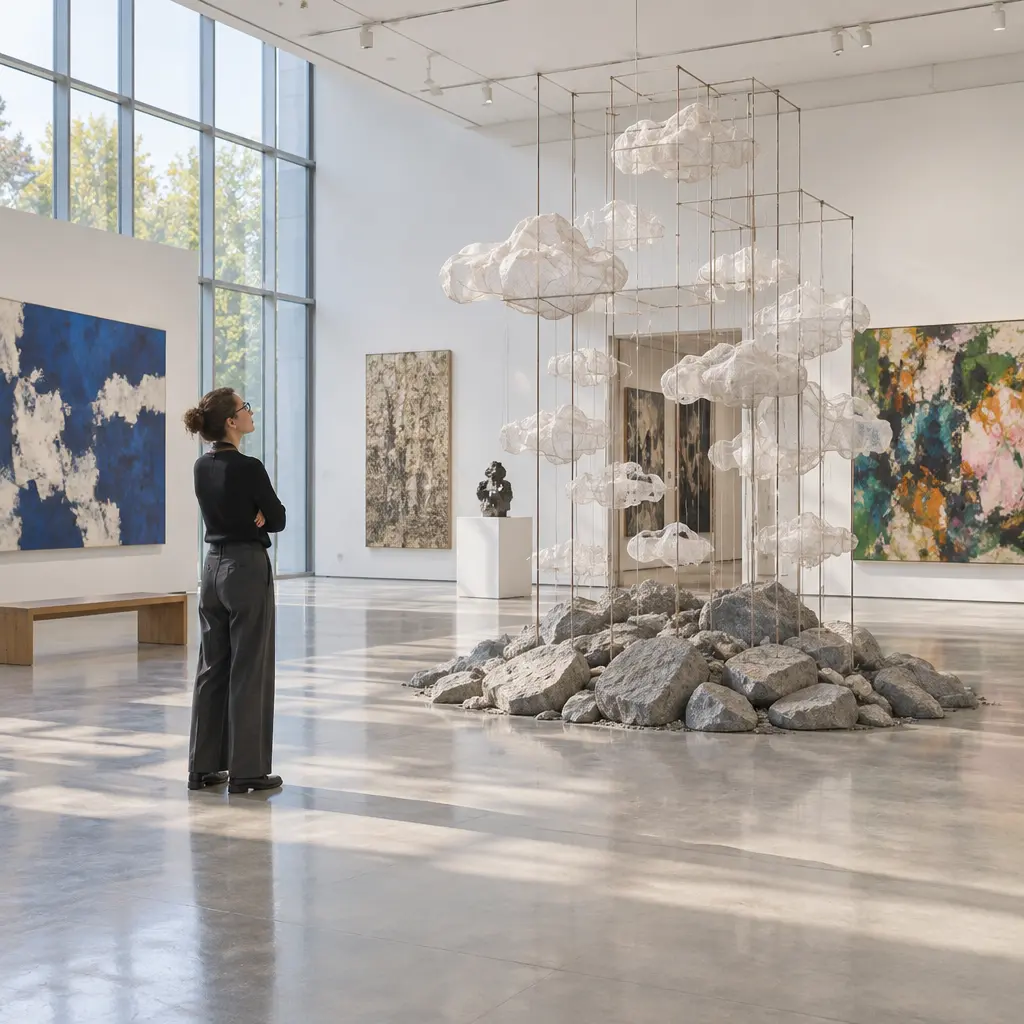
Museums are public-facing institutions that collect, preserve, interpret, and display objects and ideas; in contemporary art, they also shape how new work is commissioned, encountered, debated, and remembered. Their role now extends beyond showing art: museums connect artists with audiences, provide space for experimentation, interpret contested histories, and negotiate questions of access, representation, and ownership. The scale of this work is substantial: UNESCO’s 2021 global survey estimated that museums worldwide receive about 90% fewer visitors during the COVID-19 crisis than before it, underscoring how much public cultural life depends on their ability to adapt. From curatorial practice and artist support to digital access and ethical stewardship, museums remain influential—but their authority is increasingly questioned and shared.
Museums shape the production and interpretation of contemporary art
A museum’s role in contemporary art can be understood as the set of institutional practices through which it supports artistic production, selects and interprets work, preserves cultural material, and makes art accessible to publics. The International Council of Museums (ICOM), in its 2022 definition, describes a museum as a “not-for-profit, permanent institution in the service of society” that researches, collects, conserves, interprets, and exhibits tangible and intangible heritage. That definition places public service and interpretation alongside collection and display.
Contemporary art is not limited to work made in the present: it commonly refers to art shaped by current social, political, technological, and cultural conditions, including practices that challenge conventional media and institutions. Museums encounter it through exhibitions, commissions, acquisitions, educational programs, research, and partnerships. These functions overlap: a commissioned artwork may become part of a collection, while an exhibition can generate new research and public debate.
The importance of this role is visible in both institutional reach and public expectations. The American Alliance of Museums has reported that U.S. museums collectively welcome hundreds of millions of visits annually, while UNESCO’s pandemic-era reporting showed how sharply visitation can fall when access is disrupted. These measures do not capture every form of participation, but they illustrate why museum decisions about whose work is shown, how it is explained, and who can enter matter beyond the gallery walls.
Curating as selection, interpretation, and public argument
Curating is the process of researching, selecting, organizing, and interpreting artworks for an exhibition or collection. In contemporary art museums, curators do more than arrange objects: they build connections among artists, histories, materials, and audiences. Exhibition choices therefore make arguments, whether explicitly or through the works placed together, the labels provided, and the histories left out.
A useful example is Tate Modern’s 2000 opening in London, which presented modern and contemporary art through thematic displays rather than a strictly chronological national narrative. The approach made cross-cultural and cross-period connections more visible, while also prompting debate about how institutions frame art history. Such choices show that museum interpretation is not neutral; it is an evolving practice shaped by scholarship, institutional priorities, and public response.
Commissioning and artist support
Commissioning means inviting an artist to create a new work, often with financial, technical, or logistical support from the museum. It can enable ambitious projects that would be difficult to realize independently, including installations, performances, moving-image works, and site-specific pieces. Museums may also support artists through residencies, research access, production facilities, and public programs.
This support can influence artistic practice as well as visibility. The Turbine Hall commissions at Tate Modern, for example, have given artists a large public space for works designed around the building’s scale and architecture. At the same time, commissioning raises questions about institutional influence: artists and museums must negotiate budgets, timelines, safety requirements, and the degree of creative independence. Strong commissioning practices make these terms clear and compensate artists fairly.
Museums expand access through education and digital participation
Access is the practical and intellectual ability to encounter, understand, and participate in museum activity. It includes admission costs and opening hours, but also physical accessibility, language, interpretation, representation, and the relevance of programs to different communities. Museums increasingly treat access not as an add-on but as a core part of their public mission.
Education and audience engagement
Museum education includes guided visits, talks, workshops, school partnerships, publications, and other activities that help people engage with art. Contemporary art can involve unfamiliar materials or ideas, so interpretation can provide context without prescribing a single response. Effective programs invite questions, connect artworks to lived experience, and recognize that visitors bring different forms of knowledge.
The National Endowment for the Arts has documented the importance of arts participation to cultural life in the United States, while museum-sector studies regularly identify education and community programming as major public services. Attendance figures alone, however, do not reveal whether programs are welcoming or useful. Institutions can assess engagement through participant feedback, repeat visits, partnerships, and whether underserved groups help shape program design.
Digital access and new forms of encounter
Digital access refers to online collections, virtual exhibitions, livestreams, educational resources, and other technology-mediated ways of encountering museum work. During COVID-19 closures, museums expanded these services rapidly. UNESCO’s 2021 report on museums and COVID-19 described widespread disruption to physical operations alongside growth in digital activity, though institutions differed greatly in staffing, technology, and resources.
Online access can reach people who cannot travel, revisit works beyond gallery hours, and make collection records searchable. It does not replace the physical experience of scale, material, or shared presence, and unequal internet access can create new barriers. A balanced strategy treats digital and in-person engagement as complementary, while addressing accessibility through captions, screen-reader compatibility, clear image descriptions, and multilingual content.
Museums negotiate representation, ethics, and cultural authority
Representation concerns whose art, histories, and perspectives appear in museum collections and exhibitions. Cultural authority concerns who has the power to interpret those histories. Contemporary museums face growing calls to address gaps in representation, colonial collecting, and the unequal distribution of institutional resources. These issues affect not only what is displayed but also how museums acquire works, describe them, and share decision-making.
Broadening collections and exhibition narratives
A collection is a body of artworks and related materials held and cared for by an institution. Broadening a collection means addressing whose work has historically been overlooked and reconsidering the categories used to organize art. Museums can do this through acquisitions, loans, research, artist commissions, and partnerships with communities and scholars.
The Art Basel and UBS Survey of Global Collecting has tracked changing patterns in the art market, including participation by women collectors, but market data should not be mistaken for a complete measure of museum representation. Museums must examine their own holdings and display histories directly. Transparent collection audits and published acquisition policies help audiences understand what is changing and what gaps remain.
Repatriation, provenance, and shared stewardship
Provenance is the documented history of an artwork’s ownership and transfer. Provenance research helps museums identify objects acquired under coercive or unlawful conditions and assess claims for return. Repatriation is the return of cultural property to its community, nation, or rightful holder; shared stewardship can also involve collaborative research, loans, access, or joint interpretive authority.
The 1970 UNESCO Convention provides an international framework for preventing illicit import, export, and transfer of cultural property, although its application depends on national laws and the circumstances of each case. The Benin Bronzes are a prominent example: objects taken during the 1897 British punitive expedition have prompted return negotiations and actual transfers from European and North American institutions to Nigeria. These cases demonstrate that ethical museum practice requires sustained research, candid disclosure, and meaningful engagement with source communities.
Museums balance preservation with experimentation
Preservation means maintaining artworks and associated knowledge for future generations. In contemporary art, this task can be complicated because works may use software, unstable materials, performance, audience participation, or instructions rather than a single durable object. Conservation therefore involves decisions about what must remain unchanged and what can adapt as technologies and materials age.
Conserving time-based and technology-dependent art
Time-based media art includes work whose meaning depends on duration, such as video, sound, performance, and software-based installations. Conservators may document equipment, file formats, installation instructions, artist interviews, and acceptable substitutions. The Smithsonian Institution and the Getty Conservation Institute have both contributed research and professional guidance on preserving complex contemporary works.
A screen-based artwork, for example, may require migration to a new file format when its original playback system becomes obsolete. The museum must decide whether to preserve the original equipment, emulate its behavior, or replace it while maintaining the artist’s intent. Detailed documentation makes those decisions legible and helps distinguish necessary adaptation from alteration that would change the work substantially.
Sustainability and institutional responsibility
Environmental sustainability in museums involves reducing the climate impact of buildings, exhibitions, shipping, loans, and events while protecting collections. The International Association of Museums of Modern Art and other cultural-sector organizations have encouraged institutions to consider energy use and the environmental cost of exhibition production. Museums must balance conservation requirements, such as stable temperature and humidity, against opportunities to reduce energy consumption.
Practical measures include reusing exhibition materials, planning less carbon-intensive shipping, improving building efficiency, and coordinating loans to reduce transport. The best strategies are developed with conservators, facilities teams, artists, and lenders, because a sustainability measure that endangers a collection or compromises an artwork is not a durable solution.
Conclusion: museums remain active, contested public spaces
Museums influence contemporary art through curating, commissioning, education, digital access, collection building, ethical stewardship, and conservation. Their work can support artistic experimentation and bring audiences into contact with unfamiliar ideas, but it also carries institutional power: museums decide what receives resources, visibility, and historical attention. UNESCO’s reporting on pandemic-era visitor declines further shows why resilient, accessible public engagement matters.
The broader implication is that museums are not simply containers for art; they are changing civic institutions whose legitimacy depends on transparency, care, and responsiveness. Readers can explore a local museum’s acquisition and accessibility policies, attend a community consultation, or compare how different institutions interpret the same artist or historical event. Asking who speaks, who benefits, and what is preserved is a practical way to participate in the future of contemporary art.
Sources: International Council of Museums, Museum Definition, https://icom.museum/en/resources/standards-guidelines/museum-definition/; UNESCO, Museums Around the World in the Face of COVID-19, 2021, https://unesdoc.unesco.org/ark:/48223/pf0000376729; American Alliance of Museums, Museums and Public Value, https://www.aam-us.org/; Tate, The Turbine Hall Commissions, https://www.tate.org.uk/; National Endowment for the Arts, Survey of Public Participation in the Arts, https://www.arts.gov/impact/research/publications/survey-public-participation-arts; Art Basel and UBS, The Art Market, https://www.artbasel.com/about/initiatives/the-art-market; UNESCO, Convention on the Means of Prohibiting and Preventing the Illicit Import, Export and Transfer of Ownership of Cultural Property, 1970, https://www.unesco.org/en/legal-affairs/convention-means-prohibiting-and-preventing-illicit-import-export-and-transfer-ownership-cultural; Smithsonian Institution, Time-Based Media and Digital Art Conservation, https://www.si.edu/; Getty Conservation Institute, Modern and Contemporary Art Research, https://www.getty.edu/conservation/our_projects/science/art_conservation/modern_contemporary.html.
Related Post
Canvas Texture and Longevity What You Need to Know First
Canvas texture is the visible and tactile character of a woven fabric—its grain, surface irregularities, [...]
The Enduring Allure Of Painting As A Living Practice
Painting as a Living Practice: Why the Medium Continues to Matter Painting as a living [...]